
SCIENTIFIC LEARNING FOR EXPERIMENTAL RESEARCHERS
Scientific data analysis, made practical.
From raw experimental data to meaningful scientific results.
Explore researcher-focused tutorials on OriginPro, ImageJ, crystallography, spectroscopy, and the methods behind reliable analysis.
Step-by-step workflows · Scientific reasoning · Practical interpretation
RESEARCH WORKFLOW
From question to interpretation.
01
Start with the data
Understand what was measured and why.
02
Choose the method
Use the workflow appropriate to the measurement.
03
Question the result
Check assumptions, uncertainty and limitations.
A framework for learning—not a representation of experimental data.
✦ Guided by researcher questions
✓ Built around practical methods
◈ Carefully developed and curated
START WHERE YOUR RESEARCH TAKES YOU
Find your workflow.
Browse tutorials by the work you need to do—from scientific graphing and microscopy to diffraction and spectroscopy.
⌁
01
Graphing & Curve Fitting
OriginPro, Excel, baseline processing, peak fitting, histograms and publication-ready plots.
▦
02
Microscopy & Image Analysis
ImageJ/Fiji workflows for SEM/TEM image measurements, calibration and quantification.
◇
03
XRD & Crystallography
Diffraction analysis, refinement workflows, crystallite size and structural evaluation.
≈
04
Spectroscopy & Surface Analysis
FTIR, XPS, Raman and optical spectroscopy with practical processing guidance.
LEARN WITH INSCILAB
Popular video tutorials.
Explore established lessons from our YouTube library. Written companion guides will be added progressively.
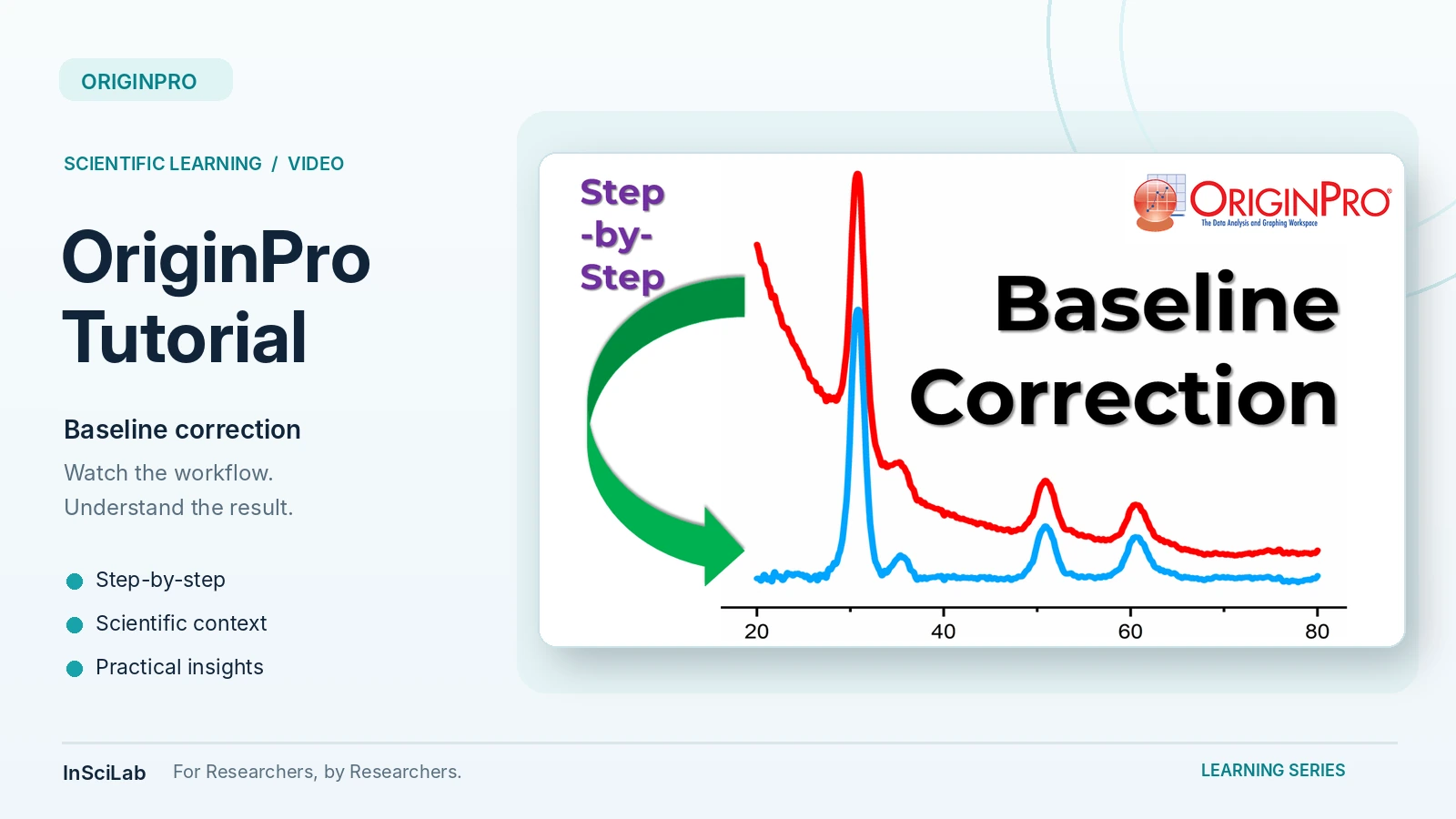
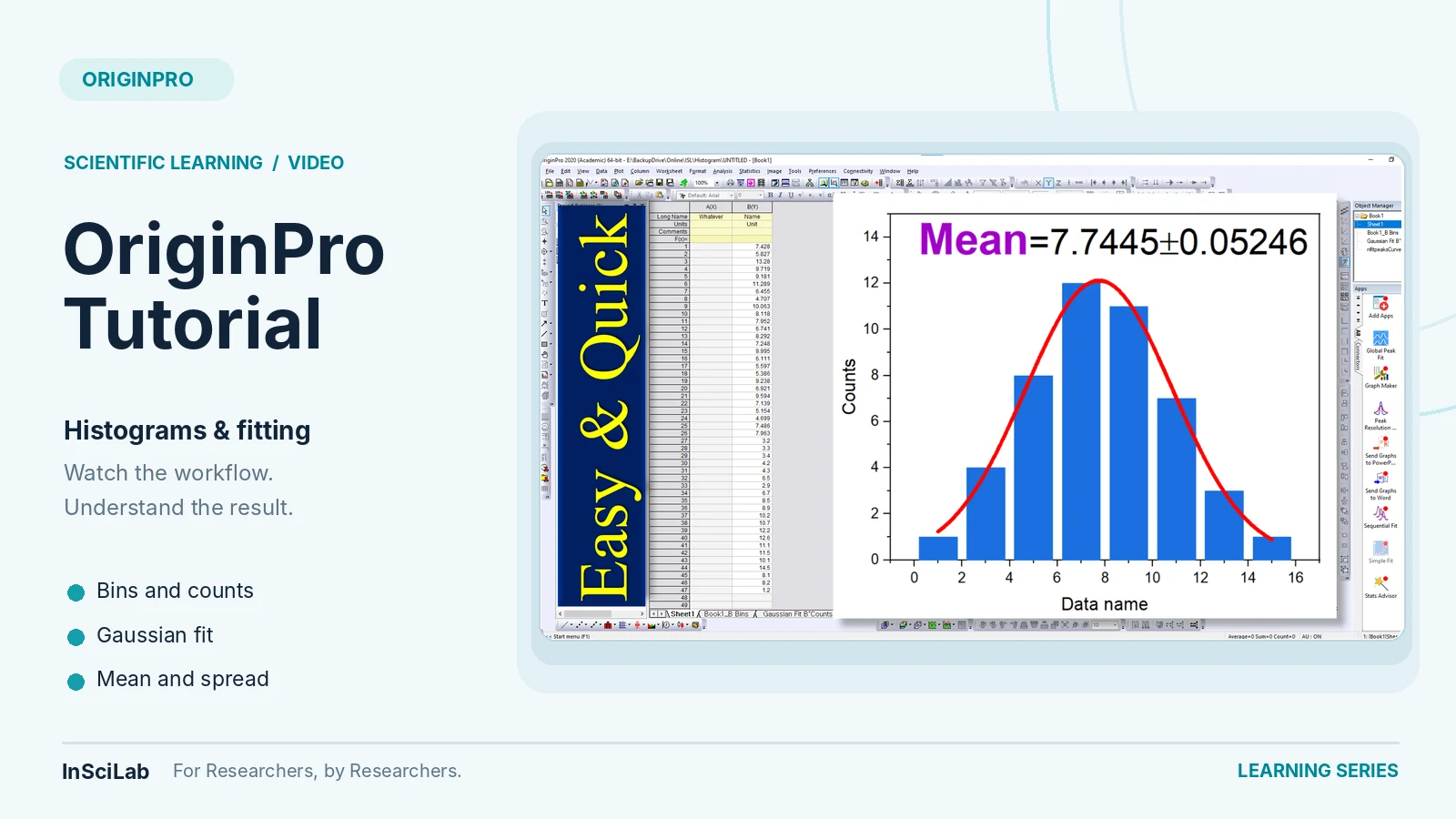
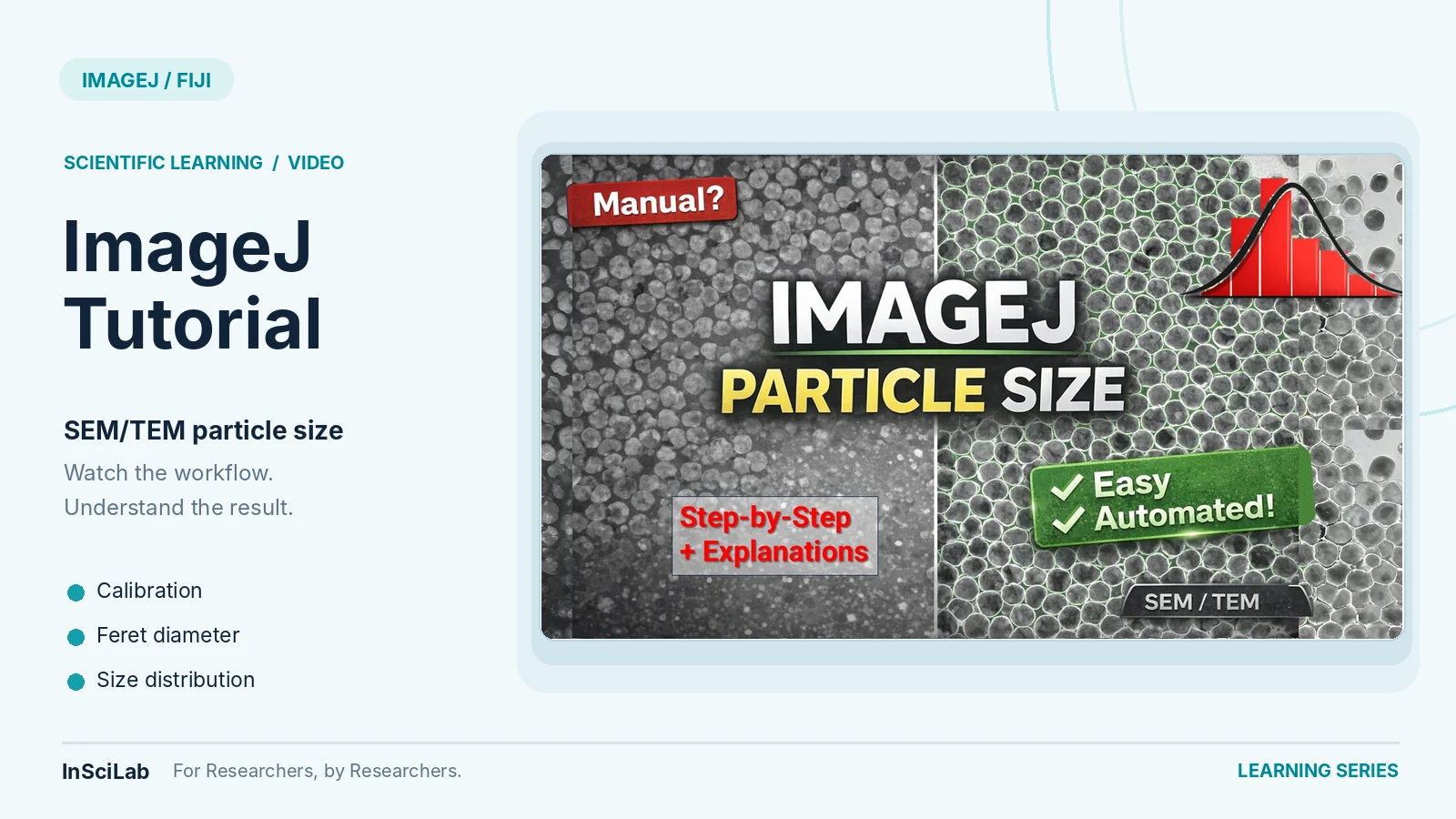
SEM/TEM particle-size analysis in ImageJ
Calibration · Thresholding · Feret diameter
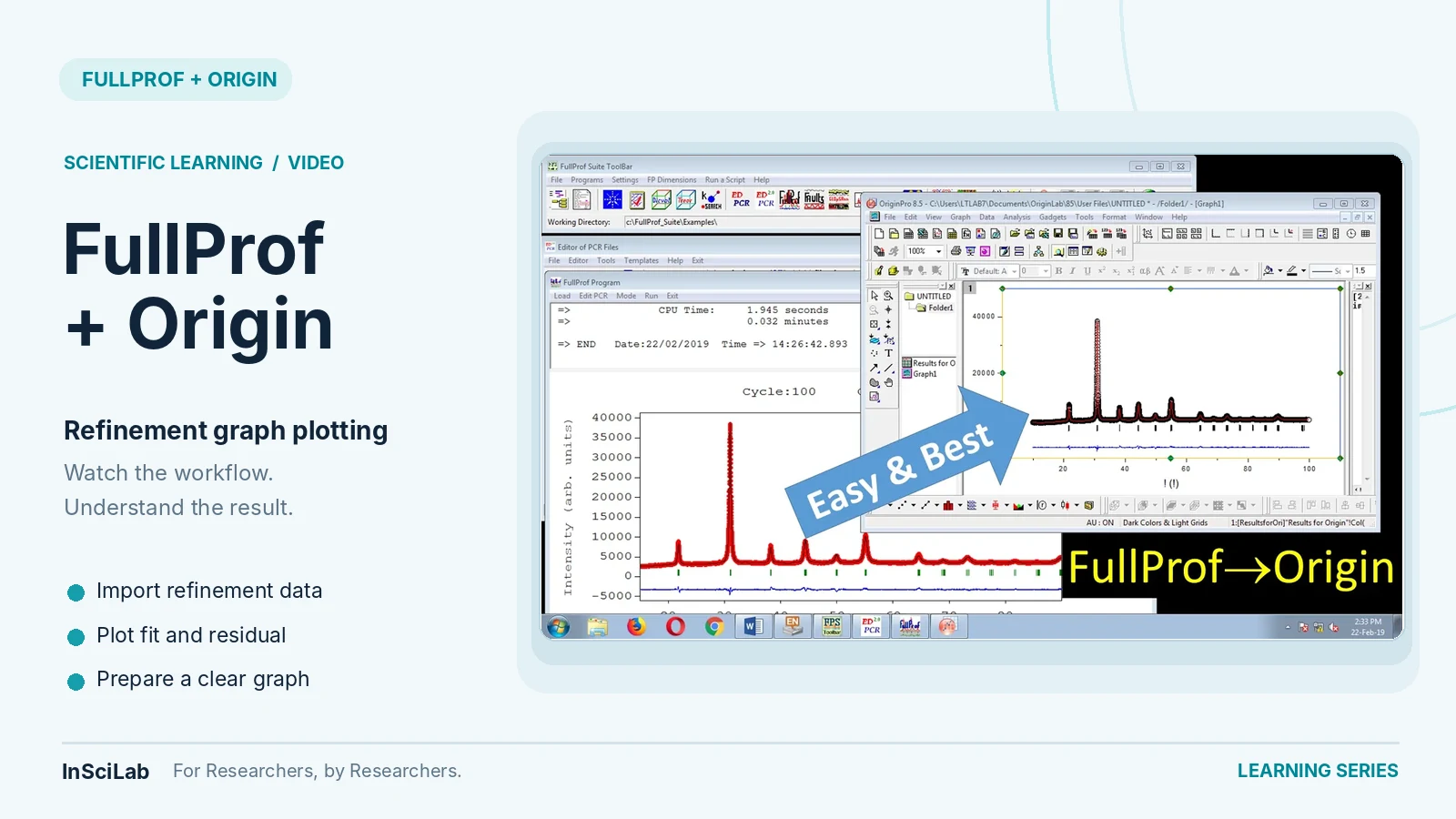
These links open individual InSciLab videos. Companion articles will replace or supplement them as they are published.
THE METHOD MATTERS
Not just which button.
Why it works.
Reliable analysis begins with understanding the data and the choices behind every processing step. We connect software steps with the scientific reasoning required to evaluate results.
✓ Start with the scientific question and raw input.
✓ Understand processing choices and potential errors.
✓ Interpret results within the method’s limitations.
01
Start with the data
Know the measurement, units and scientific purpose.
02
Apply a documented workflow
Use appropriate software tools and settings.
03
Question the result
Check assumptions, uncertainty and interpretation.
THE PEOPLE BEHIND THE QUESTIONS
Built around researchers
and their questions.
InSciLab began with a PhD researcher sharing what he was learning, so others could benefit. As more researchers joined the discussion, their questions, requests and experiences helped shape the tutorials.
That idea continues today. Conversations through YouTube, direct exchanges and research-related work help us recognize recurring challenges and turn them into practical learning resources.
Researcher-shaped. Carefully curated.
For Researchers, by Researchers.
HOW THE LEARNING EVOLVES
01
Ask
A question or research challenge
02
Discuss
Suggestions and experiences
03
Develop
An accessible explanation
04
Refine
Feedback and corrections
Researcher questions inform our priorities; each published resource remains subject to editorial review.
S
EDITORIAL STEWARDSHIP
Suman · Managing Editor
Suman manages InSciLab’s educational content and development, connecting tutorial requests, research questions, technical discussions, and researcher feedback.
With deep curiosity and interest in materials science, scientific editing, and research communication, he helps develop clear, accurate, and practical learning resources.
KEEP THE EXCHANGE GOING
What would you like to understand next?
Suggest a tutorial, discuss a practical research problem, or explore the existing video library. Your questions help shape what we work on.